
Changes in hormones can cause thicker, darker hair to grow in places such as the upper lip, chin, jawline, stomach and bikini line. This is common during puberty, pregnancy and menopause, and in conditions such as PCOS. Many people use waxing to manage this hair, which leads to a common worry: does waxing make hormonal hair growth worse?
The short answer is no. Waxing pulls hair out from the root, but it does not change your hormones or make hair grow back thicker or faster. If you notice more hair over time, that is because of the hormonal changes in your body, not because of waxing.
Here is a quick look at what waxing can and cannot do.
| Common belief | The truth |
| Waxing makes hair grow back thicker | Hair usually grows back softer than it does after shaving |
| Waxing causes more hair to grow | Hormones decide how much hair grows, not waxing |
| Waxing affects your hormones | Waxing only works on the skin and has no effect on hormones |
| Waxing removes hormonal hair for good | Results last 3–4 weeks, but new hair will keep growing |
| Waxing is not safe if you have PCOS | It is generally safe, but thick hair can lead to more ingrown hairs |
Why Does It Seem Like Waxing Makes Hormonal Hair Worse?
Many people start waxing at the same time their hormonal hair growth is increasing. Because the two happen together, it is easy to assume one causes the other. In reality, the hair would have appeared anyway.
There are three reasons waxing can create this impression.
Hormonal growth is progressive. In conditions such as PCOS, androgens gradually convert more vellus hairs into terminal hairs. Over months, you may notice hair in places it was not before. This reflects the hormones, not the wax.
Hair grows in uneven cycles. Each follicle follows its own growth cycle. Waxing removes the hairs that are visible at the time, but others are still developing beneath the skin. These emerge over the following days, which can make regrowth look faster or patchier than expected.
Shaving between waxes changes the feel. If you shave in between sessions, the blunt-cut regrowth feels coarser. This is often mistaken for thicker hair.
Is Waxing Safe If You Have PCOS or Hormonal Hair Growth?
Yes, waxing is generally safe for people with PCOS and other causes of hormonal hair growth. It is one of the more practical options for removing coarse hair, because it lifts the hair from the root and keeps the area smooth for several weeks.
However, hormonal hair tends to be thick, dark and sometimes curly. That raises the risk of three common problems.
- Ingrown hairs. Coarse, curly hair is more likely to curl back into the skin as it regrows, especially on the chin, jawline and bikini line.
- Inflamed follicles can form small red or pus-filled bumps after hair removal.
- Repeated irritation can lead to post-inflammatory hyperpigmentation, particularly on medium and deeper skin tones. Some people with PCOS also have acanthosis nigricans, a velvety darkening of skin in folds such as the underarms, neck and groin. Waxing does not cause it, but harsh technique can irritate it further.
Choosing the right wax and following good aftercare reduces all three risks.
Is Waxing Better Than Shaving for Hormonal Hair?
For most people with coarse hormonal hair, waxing offers clear advantages over shaving.
Shaving cuts hair at the surface, so dark regrowth often shows as a shadow within a day, especially on the face. It also leaves a blunt tip that is more likely to cause razor bumps. Waxing removes the whole hair, so the skin stays smooth for three to four weeks, and regrowth comes back with a softer tip.
How to Wax Hormonal Hair Safely at Home
Coarse hormonal hair responds best to a wax that grips the hair firmly without pulling too hard on the skin. Small, controlled sections work better than large strips, particularly on the face and bikini line.
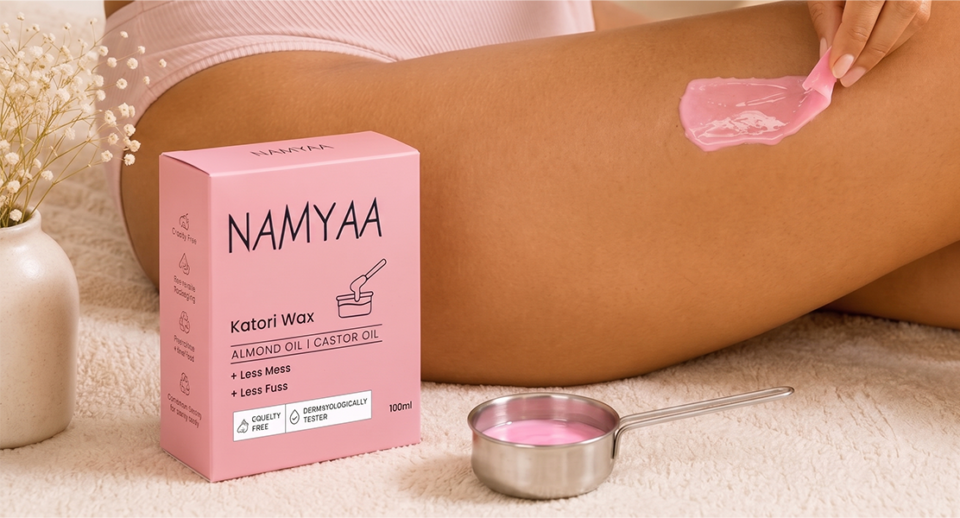
A katori wax is a practical format for this. Katori wax comes in its own small bowl, so it can be warmed and applied directly with a spatula, without transferring it to a separate heater. This makes it easier to control the quantity you heat and to work in small areas such as the upper lip, chin or bikini line. One example is the Namyaa Katori Wax. As with any wax, read the instructions carefully and patch test before your first use.
Follow these steps:
- Patch test 24 hours ahead. Apply a small amount to your inner arm and remove it. Do not proceed if you notice redness, bumps or itching the next day.
- Check hair length. Hair should be about 0.5 cm long, roughly the length of a grain of rice. Shorter hair will not grip; much longer hair is more painful to remove.
- Prepare the skin. Cleanse with a mild, fragrance-free wash and pat completely dry. Avoid oils and moisturisers beforehand.
- Heat gradually and test the temperature. Warm the wax in short intervals and stir. Test a drop on your inner wrist; it should feel warm, not hot. Facial skin is thinner, so take extra care.
- Apply in the direction of hair growth. Spread a thin, even layer over a small section.
- Hold the skin taut and remove quickly. Pull against the direction of growth, keeping your hand close to the skin.
- Limit repeat passes. Do not wax the same area more than twice in one session. Tweeze any remaining hairs.
Do not wax if: you use retinoid creams on the area (stop at least a week before), you have taken isotretinoin in the past six months to a year, the skin is broken, sunburned or infected, or you have diabetes or poor circulation without first checking with your doctor.
Aftercare to Prevent Bumps and Darkening
Aftercare matters more with hormonal hair, because coarse regrowth is more likely to become trapped.
- First 24 hours: avoid hot showers, saunas, swimming, workouts and makeup on freshly waxed facial skin.
- Soothe the area: a cool compress or fragrance-free aloe vera gel can calm redness.
- Exfoliate from day three: gently exfoliate two or three times a week to keep follicles clear.
- Protect from the sun: apply sunscreen to waxed facial skin to reduce the risk of dark marks.
- Avoid picking: squeezing bumps increases the risk of infection and lasting pigmentation.
- Moisturise daily: dry skin is more prone to irritation and trapped hairs, so keep the area hydrated between sessions.
Can Hormonal Hair Growth Be Treated, Not Just Removed?
Waxing manages the hair you can see. It does not treat the hormonal cause. If excess hair is affecting your confidence or daily routine, a doctor can assess whether treatment is appropriate.
Depending on the cause, options may include hormonal medicines that lower androgen levels or block their effects, prescription creams that slow facial hair growth, and longer-term methods such as laser hair removal or electrolysis. Managing an underlying condition such as PCOS, through medical care and lifestyle changes, can also reduce new hair growth over time. Waxing can be used alongside many of these treatments, but check with your doctor first, especially before laser.
When to See a Doctor
Hormonal hair growth is common and often harmless, but it can sometimes signal an underlying condition. See a doctor if you notice:
- Excess hair that appears suddenly or spreads quickly over a few months
- Irregular or missed periods alongside new hair growth
- Persistent acne, thinning scalp hair or weight changes
- A deepening voice, increased muscle mass or other new physical changes
- Ingrown hairs, boils or infected bumps that keep returning after waxing
- Dark patches of skin, particularly in skin folds, that are spreading
A doctor may suggest blood tests to check hormone levels and rule out conditions such as PCOS, thyroid disorders or, rarely, other hormonal problems.
Frequently Asked Questions
Does waxing make facial hair grow back thicker?
No. Waxing does not change the thickness of hair. Regrowth usually feels softer than shaved hair because it has a tapered tip.
Is waxing good for PCOS hair?
Yes. Waxing is a practical way to remove coarse PCOS hair because it lasts three to four weeks. Use small sections and good aftercare to limit ingrown hairs.
Why does my hair keep coming back faster after waxing?
Hair grows in uneven cycles, so new hairs surface in the days after waxing. Hormonal changes can also activate more follicles over time.
Can waxing reduce hormonal hair growth permanently?
No. Waxing removes hair temporarily. Some people notice slightly finer regrowth over time, but it does not address the hormonal cause.
Is waxing or threading better for hormonal facial hair?
Both remove hair from the root. Threading suits small areas such as the brows and upper lip, while waxing covers larger areas such as the chin and jawline more quickly.
Can I wax my chin if I have PCOS?
Yes, as long as the skin is not broken or inflamed. Patch test, use a low-temperature wax and apply sunscreen afterwards to reduce darkening.
When should I see a doctor about excess hair growth?
See a doctor if hair growth is sudden or rapid, or if it comes with irregular periods, acne, scalp hair thinning or a deepening voice.
The Bottom Line
So, does waxing make hormonal hair growth worse? No. Waxing removes hair from the root but has no effect on the hormones that drive new growth. If hair seems to be increasing, the cause is usually the underlying hormonal change, not the hair removal method. Waxing remains a safe and effective way to manage coarse hormonal hair, provided you patch test, control the temperature and follow good aftercare. If the growth is sudden or comes with other symptoms, speak to a doctor about the cause.
Safety Disclaimer
This article is for general information only and is not medical advice. Excess hair growth can be a sign of an underlying condition, so consult a doctor if you have concerns. Always patch test new wax products, and never wax over broken, sunburned, infected or inflamed skin. If you use prescription skin treatments or have diabetes, check with your doctor before waxing.
About the author: [Author name] is a [role] who writes about skincare and personal care.
Medically reviewed by: [Reviewer name], [Credentials].
References
- NHS. Hirsutism.
- Mayo Clinic. Hirsutism: Symptoms and causes.
- American Academy of Dermatology. How to wax.
- DermNet. Waxing.
