Waxing and shaving are the two most common ways to remove hair from the bikini line, but they work very differently. Shaving cuts hair at the skin’s surface, so regrowth appears within one to three days. Waxing removes hair from the root, so results typically last three to four weeks. That difference affects not only how long skin stays smooth, but also how often it’s exposed to friction, irritation, and the risk of ingrown hairs.
So, bikini wax vs shaving: which is better? For most people, waxing offers longer-lasting results, softer regrowth and fewer razor bumps. Shaving is quicker, painless and works on hair of any length. The better method depends on your skin type, how sensitive your skin is, and how often you are willing to repeat the process.
The table below compares both methods on the factors that matter most for the bikini area.
| Factor | Bikini wax | Shaving |
| How long results last | 3–4 weeks | 1–3 days |
| Pain | Moderate, eases with regular sessions | None, unless you nick the skin |
| Time per session | 15–30 minutes | 5 minutes |
| Hair length needed | About 0.5 cm | Any length |
| Ingrown hair and bump risk | Lower with good aftercare | Higher, especially with curly hair |
| Skin darkening risk | Lower if done gently | Higher with frequent friction and nicks |
| Regrowth feel | Soft, tapered tips | Blunt, prickly stubble |
| Best for | Longer smoothness, fewer bumps | Quick fixes, very sensitive or broken skin |
How Do Waxing and Shaving Actually Remove Hair?
The biggest difference is where the hair is removed.
Shaving cuts hair at the skin’s surface. The root stays in place, so hair reappears within a day or two. Because the razor slices straight across, the regrowing hair has a blunt tip, which is why stubble feels prickly. Shaving does not make hair grow back thicker or darker; it only feels that way because of that blunt edge.
Waxing pulls hair out from the root. New hair has to grow all the way back up from the follicle, which takes weeks. Regrowth comes back with its natural tapered tip, so it usually feels softer. With regular waxing, many people notice their bikini-line hair grows back a little finer over time, though results vary from person to person.
Which Lasts Longer: Bikini Wax or Shaving?
Waxing wins clearly on longevity. A bikini wax usually keeps skin smooth for three to four weeks, depending on how fast your hair grows. Shaving lasts one to three days before stubble returns.
That difference adds up. Someone who shaves every other day touches the area with a blade around 15 times a month. Someone who waxes does it once. Less frequent hair removal means less repeated stress on the skin, which matters for the bikini line, one of the most sensitive areas of the body.
The trade-off is the in-between phase. Wax needs hair about 0.5 cm long (roughly the length of a grain of rice) to grip properly. That usually means letting hair grow for two to three weeks between sessions. If you need to be hair-free at short notice, shaving is the more practical choice.
Waxing vs Shaving: Which Causes Fewer Ingrown Hairs?
Both methods can cause ingrown hairs, but shaving is the more common culprit on the bikini line.
When a razor cuts hair, it leaves a sharp, angled tip. As the hair grows back, especially curly or coarse hair, that tip can curl back and pierce the skin instead of growing out. This is what causes razor bumps: small, itchy, sometimes painful red spots along the bikini line.
Waxed hair regrows with a softer, tapered tip that exits the skin more easily. The risk is not zero, though. Dead skin can trap new hairs in the weeks after waxing, so gentle exfoliation is important.
Is Waxing or Shaving Better for Your Skin Type?
Your skin type can tip the decision one way or the other.
Sensitive skin. Shaving can leave sensitive skin with razor burn, redness and stinging, especially with a blunt blade or dry shaving. Waxing can also irritate sensitive skin, but the type of wax matters. Strip wax sticks to the skin as well as the hair, while stripless (hard) wax grips mainly the hair and is usually gentler.
Dry skin. Frequent shaving strips away natural oils and can leave the bikini area flaky and itchy. Waxing less often gives dry skin more recovery time, as long as you moisturise afterwards.
Oily or acne-prone skin. Both methods can trigger small breakouts or folliculitis if bacteria get into open follicles. Keep the area clean, avoid heavy creams right after hair removal, and wear breathable cotton underwear.
Darker skin tones. Skin with more melanin is more prone to post-inflammatory hyperpigmentation, meaning dark marks left behind by irritation. Repeated shaving friction and razor bumps are a common cause of a darker bikini line. Gentle, less frequent waxing often helps, but wax that is too hot or pulled roughly can cause darkening too.
Can You Wax Your Bikini Line at Home?
Yes. With the right wax and a little practice, at-home bikini waxing is a realistic option for many people. The key is choosing a formula designed for sensitive areas and controlling the temperature.
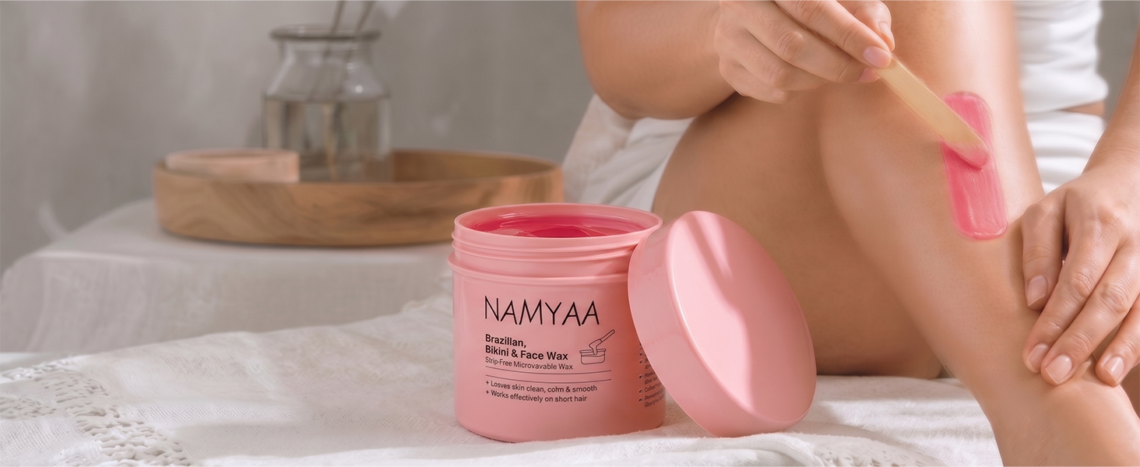
A low-heat, stripless wax is the easiest starting point for beginners. It needs no cloth strips, and working at a lower temperature reduces the risk of burns on delicate skin. One example is the Namyaa Strip-Free Microwavable Wax, which heats in the microwave and peels off without strips. Whatever product you use, read the instructions and do a patch test first.
How to wax your bikini line safely at home:
- Patch test 24 hours ahead. Apply a small amount to your inner arm and remove it. Skip waxing if you see redness or itching the next day.
- Check hair length. Trim to about 0.5 cm. Hair that is longer is more painful to remove; hair that is shorter will not grip.
- Clean and dry the skin. Wash with a mild cleanser and pat completely dry. Skip oils and lotions beforehand.
- Heat gently and test. Warm the wax in short bursts, stirring between each. Test a drop on your inner wrist; it should feel warm, never hot.
- Work in small sections. Spread a thin layer in the direction of hair growth. Leave a slightly thicker edge to grip.
- Hold skin taut and pull fast. Once the wax firms, pull it off quickly against the direction of growth, keeping it close to the skin.
- Do not repeat a patch more than twice. Tweeze any stray hairs instead.
Do not wax if: you are using retinoid creams on the area (stop for at least a week first), you have taken isotretinoin in the past six months to a year, the skin is broken, sunburned or infected, or you have diabetes or poor circulation without checking with your doctor first.
How to Shave Your Bikini Line Without Irritation
If shaving suits your lifestyle better, good technique makes a big difference.
- Soften the hair first. Shave at the end of a warm shower so hair and skin are hydrated.
- Use a sharp, clean razor. Replace the blade every five to seven shaves, and never share razors.
- Always use a shaving gel or cream. Dry shaving is one of the fastest routes to razor burn.
- Shave in the direction of hair growth. Going against the grain gives a closer shave but raises the risk of bumps and ingrown hairs.
- Rinse the blade after every stroke. A clogged razor drags across the skin.
- Skip shaving over bumps or cuts. Let them heal first.
Aftercare for Both Methods
The first 24–48 hours after hair removal decide how your skin looks for the rest of the week.
- Wear loose, breathable underwear to cut down on friction.
- Skip hot baths, saunas, swimming and workouts for 24 hours after waxing, while follicles are open.
- Soothe with a fragrance-free moisturiser or aloe vera gel. Avoid scented lotions and deodorants on the area.
- Exfoliate gently from day three, two or three times a week, to help prevent ingrown hairs.
- Leave bumps alone. Picking can cause infection and dark marks that last longer than the bump.
When to See a Doctor
Speak to a doctor or dermatologist if you notice any of the following after waxing or shaving:
- Redness, swelling or warmth that spreads or worsens after 48 hours
- Pus-filled bumps, boils or painful lumps
- Burns or blisters from hot wax
- Fever or feeling unwell
- Ingrown hairs or razor bumps that keep coming back despite good care
- Dark patches that are not fading after several months
Frequently Asked Questions
Does shaving make bikini hair grow back thicker?
No. Shaving cuts hair at the surface and does not change the root. Regrowth only feels thicker because of the blunt tip a razor leaves.
Is waxing more painful than shaving?
Yes. Waxing causes a short, sharp sting, while shaving is painless when done properly. Waxing usually becomes less painful with regular sessions.
Which is better for sensitive skin, waxing or shaving?
It depends on how your skin reacts. Many people with sensitive skin find low-heat stripless wax gentler than frequent shaving, but a patch test is the best way to know.
How long should bikini hair be before waxing?
About 0.5 cm, or roughly the length of a grain of rice. That usually means two to three weeks of growth after shaving.
Can I shave between waxing sessions?
You can, but it resets your regrowth cycle and can bring back razor bumps. Trimming is a better option between waxes.
Does waxing cause dark skin on the bikini line?
It can if the wax is too hot or the skin is pulled harshly. Repeated shaving is a more common cause of darkening because of daily friction and razor bumps.
Is it safe to wax the bikini line at home?
Yes, for most people, if you use a wax made for sensitive areas, test the temperature, patch test first and avoid broken or irritated skin.
The Bottom Line
So, bikini wax vs shaving: which is better? If you want smooth skin that lasts for weeks and fewer razor bumps, waxing is usually the better choice. If you need something quick, painless or last-minute, shaving does the job. Many people use both: waxing as their main routine and trimming or shaving only when needed. Whichever you choose, gentle technique and good aftercare matter more than the method itself.
Safety Disclaimer
This article is for general information only and is not medical advice. Always patch test new hair removal products. Do not wax or shave over broken, sunburned or infected skin. If you have diabetes, a skin condition, or are using prescription skin treatments, speak to your doctor before waxing.
About the author: [Author name] is a [role] who writes about skincare and personal care.
Medically reviewed by: [Reviewer name], [Credentials].
References
- American Academy of Dermatology. How to wax.
- American Academy of Dermatology. How to shave.
- DermNet. Waxing.
- NHS. Ingrown hairs.
